 Arabic
 Russian
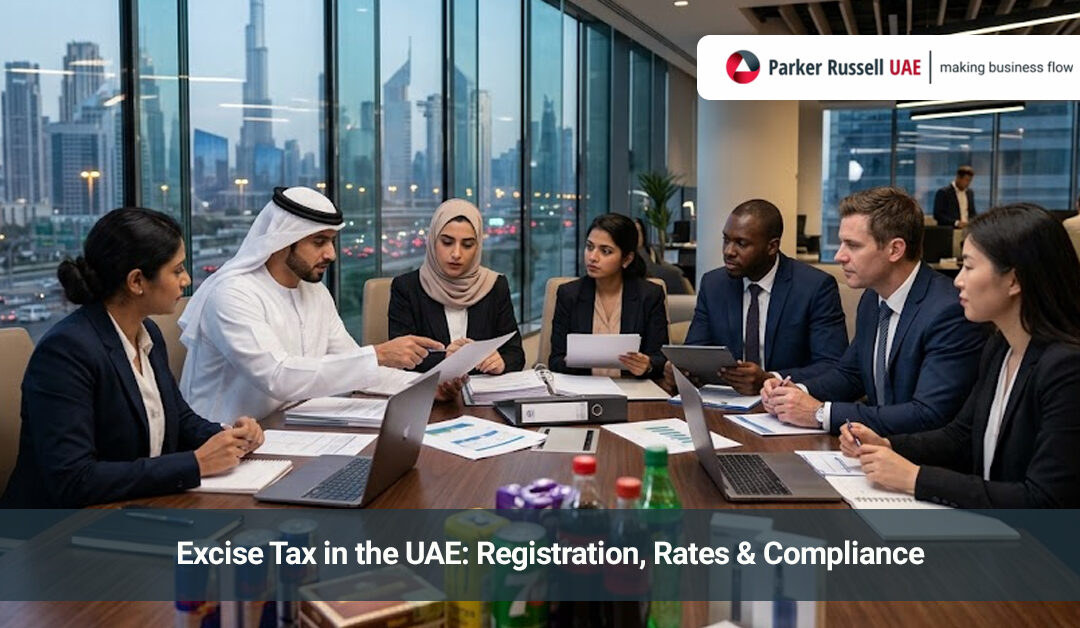
Excise tax in the UAE is a tax on specific goods that harm health or the environment. It started in 2017. It applies when these goods enter the supply chain, and it carries strict rules. So this guide explains which products are taxed, at what rates, who must register, and how to stay compliant.
What Is Excise Tax?
Excise tax is a consumption tax. Its aim is to cut the use of harmful goods and to raise public revenue. Unlike VAT, which applies broadly at 5%, excise tax targets a short list of products at high rates. The Federal Tax Authority runs it.
Which Products Are Taxed, and at What Rates?
- Tobacco and tobacco products — 100%
- Energy drinks — 100%
- Electronic smoking devices and liquids — 100%
- Carbonated drinks — 50%
- Sweetened drinks — 50%
Because the rates are high, excise tax hits pricing and cash flow hard. Therefore, correct classification is essential.
Who Must Register?
You must register if you do any of the following:
- Import excise goods into the UAE
- Produce or manufacture excise goods
- Stockpile excise goods in certain cases
- Release goods from a designated zone
- Act as a warehouse keeper
Importantly, there is no threshold. So if you deal in excise goods, you generally register before you start.
How to Register and File
Registration and returns run through the EmaraTax portal. After you register, you file excise returns and pay the tax every month. Meanwhile, you must keep detailed records of goods produced, imported, stockpiled, and released. In practice, the FTA examines these records closely.
Designated Zones
You can hold excise goods in FTA-approved designated zones without the tax becoming due. The tax then falls due when the goods are released for consumption. As a result, designated zones can improve cash flow. However, they need careful control and reporting.
Penalties for Non-Compliance
The FTA imposes administrative penalties for late registration, filing, or payment, and for poor records. Because the rates are so high, even small errors can create large liabilities. Therefore, professional oversight usually pays for itself.
Staying Compliant With Excise Tax in the UAE
Ongoing compliance with excise tax in the UAE rests on three habits. First, classify products accurately, and review the list whenever your range changes. Next, keep real-time stock records, and reconcile them with customs data and physical counts. Then file and pay on time every month. Also, watch designated-zone movements closely, because tax falls due on release. Finally, run internal checks before the FTA does. In short, build excise controls into your tax governance from day one.
How Parker Russell UAE Helps
Our specialists first confirm whether your products are in scope. Then we manage registration, set up the records the FTA expects, and file your monthly returns. We also connect excise with your wider tax services and corporate tax obligations. As a result, everything stays joined up.
Conclusion
Excise tax in the UAE is narrow in scope but heavy in rate. So it demands disciplined registration, filing, and records. If you deal in tobacco, energy drinks, vaping products, or sugary drinks, treat excise as a core duty. Above all, get expert help with classification and designated-zone rules.
FAQ
What is the rate on energy drinks and tobacco?
Both are taxed at 100%, as are vaping devices and liquids. Carbonated and sweetened drinks are taxed at 50%.
Is there a registration threshold?
No. Unlike VAT, excise has no threshold, so you register before you start.
How often do I file?
Every month, through EmaraTax.
What are designated zones?
FTA-approved areas where excise goods can be held until they are released for consumption.
Need Help With Excise Tax Compliance?
Parker Russell UAE manages excise registration, records, and returns end to end. Call +971 4 2959958 (Dubai) or +971 2 645 2666 (Abu Dhabi), email infodubai@pr-uae.com, or explore our tax services in the UAE.